
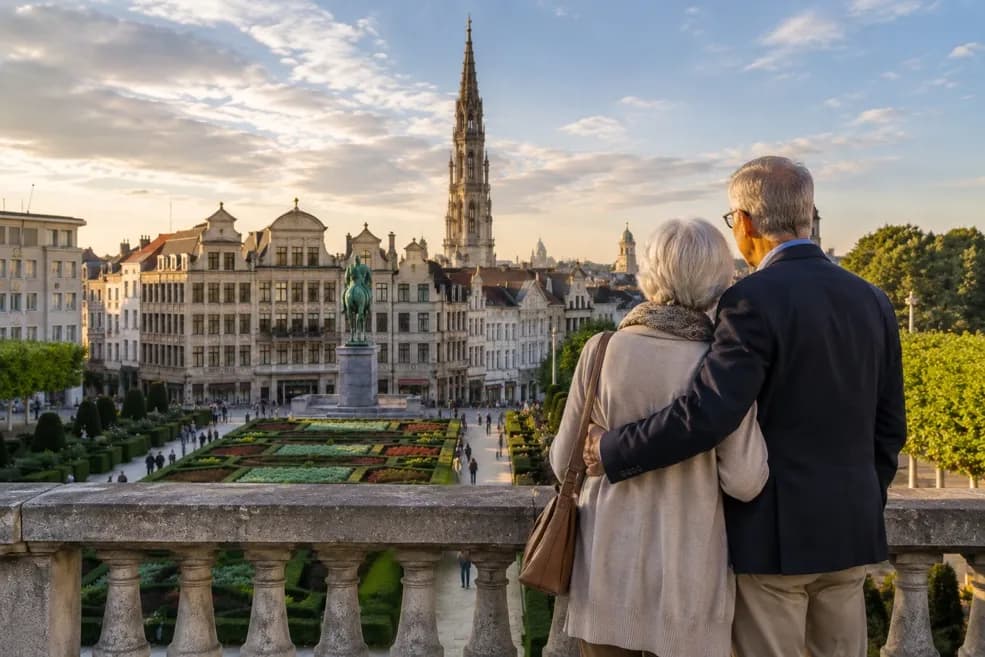
Brussels is not one city but a mosaic of neighbourhoods, each with its own mood: medieval lanes around the Grand-Place, antique dealers on the Sablon, flea-market bargains in the Marolles, Art Nouveau façades in Saint-Gilles and lively squares in Ixelles. Knowing which is which will help you choose where to stay and how to spend your free time.
This guide is part of our complete Brussels travel guide.
The neighbourhoods at a glance
- First visit, short stay: Grand-Place and the historic centre.
- Food and a local feel close to the centre: Sainte-Catherine and Dansaert.
- Elegance, chocolate and antiques: Sablon.
- Authentic and offbeat: the Marolles.
- Architecture lovers: Saint-Gilles.
- Restaurants and nightlife: Ixelles.
- Business travellers: the European Quarter.
Grand-Place and the historic centre (Îlot Sacré)
The area around the Grand-Place, sometimes called the Îlot Sacré, is the heart of the old town. Here you will find the UNESCO-listed square, the Royal Saint-Hubert Galleries, Manneken Pis and a maze of narrow streets named after the trades that once occupied them.
- Pros: everything is within walking distance; ideal for a one or two-night stay.
- Cons: busy and touristy, especially in the restaurant streets around the Rue des Bouchers.
Sainte-Catherine and Dansaert
A few minutes north-west of the Grand-Place, the Sainte-Catherine district grew around the old port. The street names around the Marché aux Poissons recall the quays that were filled in long ago, and the area is still known for seafood restaurants. In December it becomes the centre of the Winter Wonders Christmas market.
Next door, the Rue Antoine Dansaert is where you will find Belgian fashion designers, concept stores and coffee bars.
- Best for: foodies and travellers who want a central base with a more local atmosphere.
Sablon
Uphill from the centre, the Sablon is the city's most elegant neighbourhood. The Grand Sablon square is lined with antique dealers, art galleries and some of Belgium's top chocolatiers, facing the Gothic church of Notre-Dame du Sablon. Across the street, the small Petit Sablon garden is surrounded by statues representing the old guilds.
At weekends, an antiques market takes place on the Grand Sablon (Saturday 9:00–17:00, Sunday 9:00–15:00).
- Best for: couples, art and antiques lovers, and anyone who wants to be close to the Royal Quarter and the museums of the Mont des Arts.
The Marolles
Below the monumental Palace of Justice, the Marolles is the historic working-class quarter of Brussels, with its own dialect, traditions and humour. The Rue Haute and the Rue Blaes are full of second-hand and vintage shops, and the Place du Jeu de Balle hosts a flea market every day (until 14:00, 15:00 at weekends).
From the Place Poelaert, next to the Palace of Justice, a free public lift connects the upper city to the Marolles and offers a great view over the rooftops (it is sometimes out of service, so be ready to take the stairs). In June 2026 the central part of the Palace of Justice's main façade was freed from its long-standing scaffolding, although restoration continues on the rest of the building until about 2035.
- Best for: bargain hunters, photographers and travellers who like neighbourhoods with character.
Saint-Gilles
South of the centre, Saint-Gilles is a must for architecture lovers. Its streets contain some of the finest Art Nouveau houses in Brussels, and the Horta Museum, Victor Horta's own house and studio, is part of a UNESCO World Heritage listing. The Parvis de Saint-Gilles is a lively square with cafés and a market from Wednesday to Sunday, and the neighbourhood has a young, creative atmosphere.
- Best for: design lovers and travellers who like a residential, local feel.
- Tip: book the Horta Museum online in advance.
Read more about the Art Nouveau houses in our guide to Brussels architecture and landmarks.
Ixelles
Ixelles is a large and varied district with something for everyone:
- Place Flagey and its striking Art Deco former radio building, now a cultural centre.
- The Ixelles Ponds, surrounded by beautiful houses, for a relaxed walk.
- Matongé, a colourful area shaped by the city's Congolese and African communities, with shops and restaurants.
- Châtelain, known for its restaurants, bars and an afternoon market on Wednesdays.
- Avenue Louise, the city's most upmarket shopping avenue.
- Best for: food, nightlife and longer stays.
The European Quarter
East of the centre, the European Quarter is home to the European Commission, the Council of the EU and the European Parliament. It is quiet in the evenings and at weekends, but it has excellent free attractions: the Parlamentarium and the House of European History, plus the green Leopold Park and the nearby Cinquantenaire Park with its triumphal arch and museums.
On the Place Jourdan, Maison Antoine has been serving fries since 1948 and is one of the most famous friteries in the city.
- Best for: business travellers and visitors interested in Europe.
Which neighbourhood should you choose?
For a first visit of one or two nights, stay near the Grand-Place or the Sablon so that you can walk everywhere. For a longer stay or a more local experience, Saint-Gilles and Ixelles are excellent choices, with good tram and metro connections to the centre.
Explore the neighbourhoods with a local guide
Many of the most interesting corners of Brussels are easy to miss on your own. On our private tour The Heart of Belgium — History, Elegance & Chocolate, your guide and chauffeur take you from the Grand-Place to the Royal Quarter and the Mont des Arts, and can add Art Nouveau streets or the Sablon according to your interests.
Continue planning with our Belgian food guide and our Brussels travel tips.