
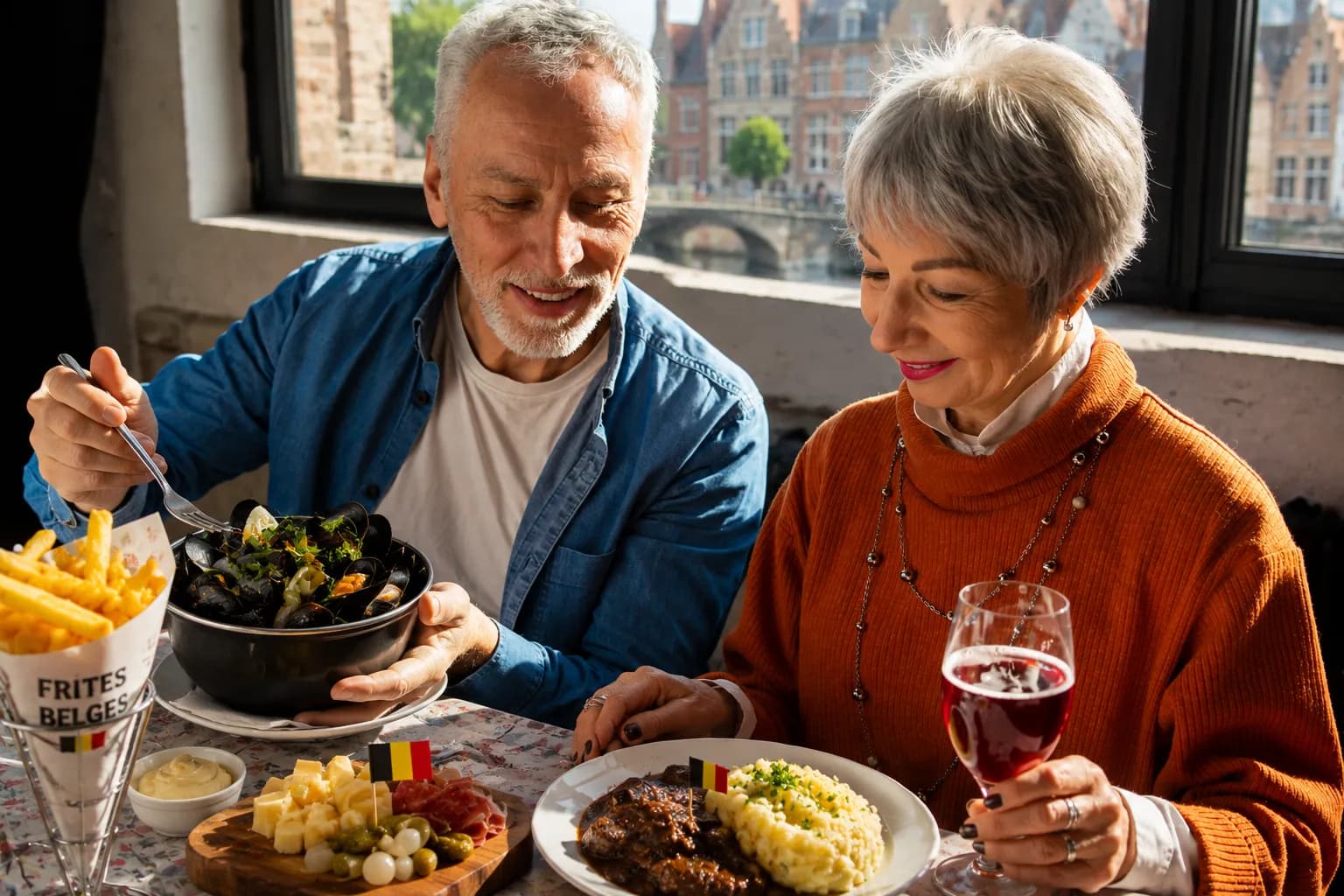
Belgian food is generous, comforting and full of character. Brussels is the best place to try it all: street food like fries and waffles, classic brasserie dishes like mussels and beef stew, and some of the finest chocolate in the world. Here is what to order, and a few tips to avoid tourist traps.
This guide is part of our complete Brussels travel guide.
Belgian fries (frites)
Belgians are proud to have made fries an art. Real Belgian fries are cut thick and cooked twice: first to cook them through, then at a higher temperature to make them crisp. They are served in a paper cone with a sauce on top, from mayonnaise to andalouse, samurai or tartare.
- Where to try them: a friterie or fritkot, the local fry stands. One of the most famous is Maison Antoine on the Place Jourdan, near the European Quarter, open since 1948.
- Tip: order a small portion first; Belgian portions are large.
Waffles: Brussels or Liège?
There are two main types of Belgian waffle, and locals have strong opinions about both:
- The Brussels waffle is large, rectangular, light and crispy, usually dusted with icing sugar. It is best eaten sitting down, with a fork.
- The Liège waffle is smaller, denser and chewier, with pearls of sugar that caramelise during cooking. It is the one you eat on the go.
Tip: the waffles covered with mountains of cream, fruit and chocolate sauce near Manneken Pis are made for photos. Locals usually eat them plain or with just sugar.
Belgian chocolate and pralines
Brussels is the birthplace of the praline: Jean Neuhaus created it in 1912 in the family shop in the Galerie de la Reine, part of the Royal Saint-Hubert Galleries. Today the Galleries and the Sablon square are the best places to compare the great chocolate houses, from historic names to modern artisan chocolatiers.
- Buy pralines by weight in a ballotin, the classic cardboard box.
- Many chocolatiers offer a tasting piece; it is the best way to find your favourite.
- Pralines are fresh products: eat them within a couple of weeks and keep them cool.
Classic Belgian dishes
Moules-frites
Mussels cooked in a large pot, most often marinière style with white wine, celery and onions, and served with fries. It is the national dish and you will find it in brasseries all over Brussels.
Carbonnade flamande
A slow-cooked beef stew made with Belgian beer, onions and a touch of brown sugar or gingerbread, usually served with fries. Perfect on a cold day.
Stoemp
Mashed potatoes mixed with vegetables such as carrots, leeks or spinach, often served with sausage or bacon. Simple, filling and very Brussels.
Shrimp croquettes
Crispy croquettes filled with a creamy sauce and small grey North Sea shrimps, served as a starter with lemon and fried parsley.
Waterzooi
A creamy soup-stew from Ghent, made with chicken or fish and vegetables. You will find it on the menu of many traditional Brussels restaurants.
Chicons au gratin
Belgian endives wrapped in ham and baked in a cheese sauce: a winter classic of Belgian home cooking.
Sweet treats beyond chocolate
- Speculoos: thin, crunchy spiced biscuits, traditionally eaten around Saint Nicholas in early December, and now available all year round, including as a spread.
- Cuberdons: cone-shaped raspberry sweets with a soft, syrupy centre.
- Pain à la grecque: a sugary Brussels pastry with a name that has nothing to do with Greece.
Belgian beer
Belgian beer culture has been on UNESCO's list of intangible cultural heritage since 2016. Belgium brews a huge variety of styles, each served in its own glass:
- Trappist and abbey beers, such as dubbels and tripels.
- Lambic, gueuze and kriek, the spontaneously fermented beers of the Brussels region, from tart and dry to fruity.
- Saisons and blond ales, often light and refreshing.
Many Belgian beers are strong (8% or more). Order a small glass first. For a famous address, the Delirium Café, near the Rue des Bouchers, set a Guinness World Record in 2004 for the number of beers on offer.
Tips for eating out in Brussels
- Avoid the restaurant touts in the Rue des Bouchers. Walk a few streets further, to Sainte-Catherine, the Sablon or Ixelles, for better value.
- Lunch menus (plat du jour or lunch) on weekdays are often the best deal.
- Tipping: service is usually included. Rounding up or leaving a little extra for good service is appreciated but not required.
- Tap water is safe to drink; ask for a carafe if you prefer.
- Book ahead at weekends for popular restaurants.
Taste Brussels with a private guide
Our private Brussels tour The Heart of Belgium — History, Elegance & Chocolate takes you through the Grand-Place, the Galleries and the Sablon, where your guide can stop at the best chocolatiers and recommend authentic places to eat. For other ideas, see the best neighbourhoods in Brussels or our family guide.